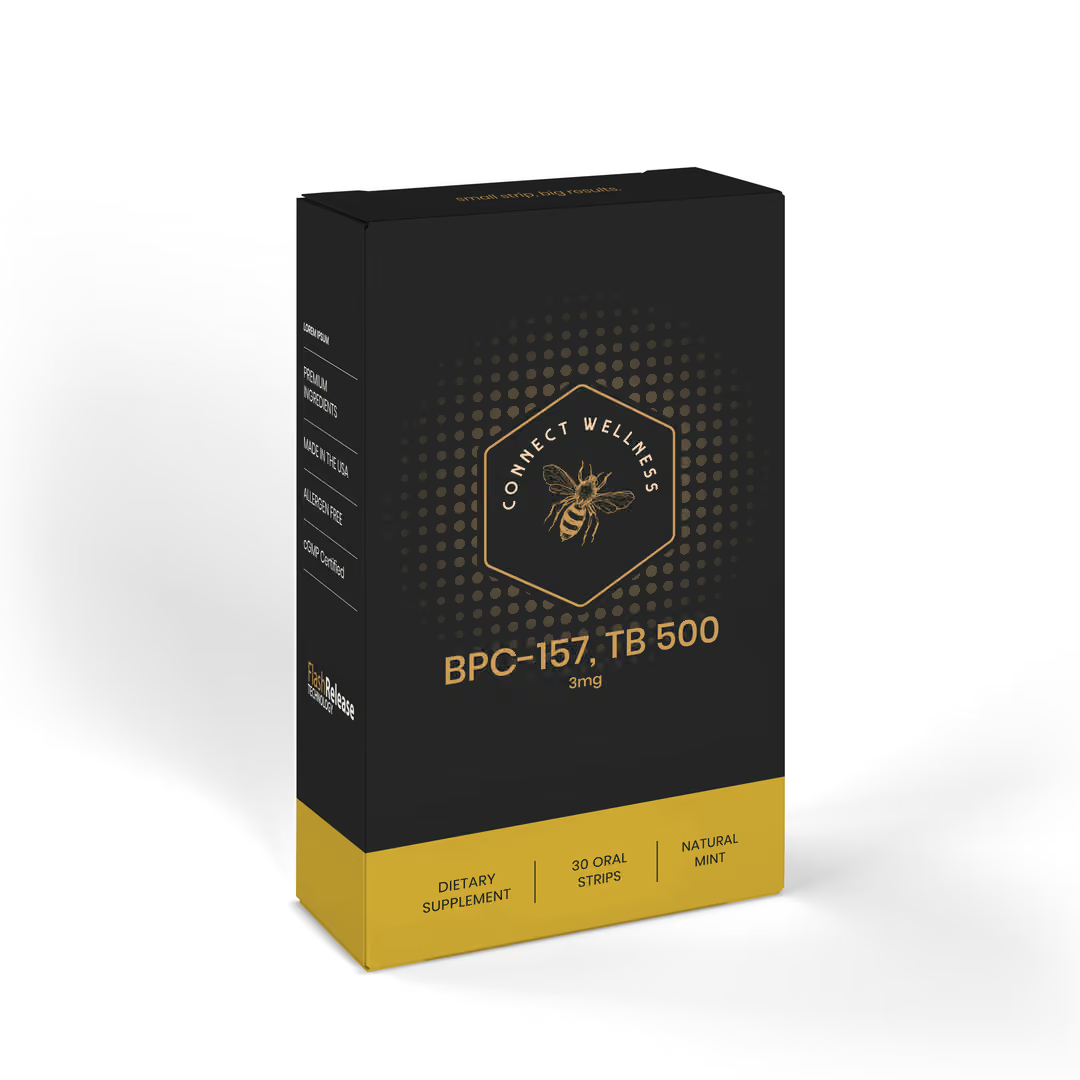
BPC-157 and TB-500 Oral Strips: Benefits, Research, and How They Work
Peptide research has become an increasingly popular topic in regenerative medicine, tissue repair, recovery, and wellness. Two peptides receiving particular attention are BPC-157 and TB-500.
Both peptides have been investigated for their involvement in biological processes associated with tissue healing, inflammation, and cellular repair.
Although they are often discussed together, BPC-157 and TB-500 are different compounds with distinct mechanisms and research histories.
At Treasure Valley Pain & Hormones in Meridian, Idaho, we believe patients benefit from understanding the science behind emerging therapies, including their potential applications and the limitations of current research.
Let’s explore how BPC-157 and TB-500 work, what researchers are studying, and how oral dissolving strips differ from other formulations.
What Is BPC-157?
BPC-157, short for Body Protection Compound-157, is a synthetic peptide consisting of 15 amino acids.
It has attracted scientific interest because of its potential influence on biological pathways involved in tissue maintenance, inflammation, and repair.
Much of the available research comes from laboratory and animal studies.
What Are Researchers Studying BPC-157 For?
Researchers have investigated BPC-157 in several areas:
- Tendon and ligament repair: Experimental studies have explored its effects on connective tissue healing.
- Muscle recovery: Animal research has examined processes associated with muscle injury and tissue regeneration.
- Gastrointestinal health: Studies have investigated its effects on the stomach and intestinal lining.
- Inflammatory signaling: Researchers have explored its influence on pathways involved in inflammatory responses.
- Blood vessel formation: Experimental studies have examined processes involved in angiogenesis, which is important for tissue repair.
These findings have generated interest in BPC-157, particularly in regenerative medicine and musculoskeletal research.
However, human clinical evidence remains limited, and the results of animal studies cannot automatically be applied to patients.

What Is TB-500?
TB-500 is a synthetic peptide associated with research involving thymosin beta-4, a naturally occurring protein found in many tissues throughout the body.
Thymosin beta-4 participates in cellular processes involved in tissue maintenance, cell movement, and repair.
It is important to understand that TB-500 and full-length thymosin beta-4 are not necessarily identical. Research findings involving one compound cannot automatically be applied to the other.
What Are Researchers Studying TB-500 For?
Scientific interest includes several biological processes:
- Cell migration: The movement of cells involved in normal tissue maintenance and repair.
- Tissue remodeling: Processes that help tissues adapt and reorganize following injury.
- Wound healing: Cellular mechanisms involved in repairing damaged tissue.
- Inflammatory responses: Pathways that help regulate inflammation.
- Connective tissue biology: Processes associated with maintaining the structural integrity of tissues.
These areas of research help scientists better understand the role of peptide signaling in tissue repair.
Clinical studies are still needed to determine whether TB-500 provides meaningful benefits in humans.
Why Are BPC-157 and TB-500 Often Combined?
BPC-157 and TB-500 are frequently discussed together because both have attracted interest in tissue repair research.
However, they influence different biological processes.
BPC-157 has been investigated in experimental models involving gastrointestinal tissues, tendons, ligaments, and inflammatory signaling.
TB-500 is associated with research into cell migration, tissue remodeling, and wound repair pathways.
This has generated interest in whether the compounds might have complementary effects.
At present, there is insufficient human clinical evidence to establish that combining BPC-157 and TB-500 improves healing, recovery, or other health outcomes.
Potential Areas of Interest in BPC-157 and TB-500 Research
1. Tendon and Ligament Health
Tendons connect muscles to bones, while ligaments connect bones to other bones.
These structures have important roles in movement, joint stability, and physical activity.
Researchers have investigated whether BPC-157 influences biological processes involved in tendon and ligament healing.
Much of this work has involved animal models. Additional human research is necessary to determine its clinical relevance.
2. Muscle Recovery and Tissue Repair
Muscle tissue undergoes ongoing processes of maintenance and repair.
Experimental research involving BPC-157 and thymosin beta-4-related pathways has explored cellular responses associated with tissue injury.
These findings have attracted attention in sports medicine and regenerative medicine research.
However, improved muscle recovery or faster healing in humans has not been established for BPC-157 and TB-500 combination products.
3. Gastrointestinal Health
BPC-157 has also been studied in experimental models involving the gastrointestinal tract.
Researchers have explored its potential influence on intestinal tissue integrity, inflammatory responses, and protective mechanisms within the digestive system.
These findings are particularly interesting because the gastrointestinal lining plays an important role in nutrient absorption and immune function.
Human studies are still needed to determine whether BPC-157 has clinically meaningful effects on gastrointestinal conditions.

4. Inflammation and Cellular Signaling
Inflammation is a normal part of the body’s response to injury and infection.
However, inflammatory pathways can also contribute to chronic health conditions.
Experimental studies have explored how these peptides interact with processes associated with inflammation and tissue repair.
Understanding these pathways may contribute to future medical research.
5. Connective Tissue and Healthy Aging
Connective tissues provide structure and support throughout the body.
With age, changes occur in collagen organization, tissue elasticity, and the body’s normal repair processes.
Peptide research has explored some of the biological pathways involved in these changes.
However, BPC-157 and TB-500 have not been established as treatments for slowing aging or reversing age-related tissue changes.
What Are BPC-157 and TB-500 Oral Dissolving Strips?
Oral dissolving strips are thin films designed to dissolve inside the mouth.
This delivery format differs from injectable preparations and offers a needle-free method of administration.
Depending on the formulation, ingredients may be intended for absorption through oral tissues or may be swallowed after the strip dissolves.
How Do Oral Peptide Strips Work?
Peptides are chains of amino acids.
When swallowed, many peptides can be broken down by digestive enzymes before reaching systemic circulation.
Oral film formulations may be designed to use the tissues inside the mouth as an alternative absorption pathway.
However, absorption depends on the specific peptide, formulation, and other pharmaceutical factors.
For BPC-157 and TB-500 combination oral strips, reliable human studies have not established their absorption, clinical effectiveness, or long-term safety.
Research involving other routes of administration should not automatically be applied to oral dissolving strips.
Our Compounding Pharmacy: Connect Wellness in Eagle, Idaho
At Treasure Valley Pain & Hormones, we work with Connect Wellness Compounding Pharmacy, located in Eagle, Idaho.
Connect Wellness prepares customized prescription formulations and lists BPC-157/TB-500 oral films among its peptide products.
The pharmacy describes its services as including:
- Customized prescription formulations
- Pharmacy quality-control procedures
- Preparation under applicable compounding standards
- Collaboration with healthcare providers
- Prescription fulfillment in states where the pharmacy is licensed
We believe patients should have access to transparent information about the pharmacies involved in their healthcare.
Learn more about Connect Wellness through its official website.
Important Safety and Regulatory Information
BPC-157 and TB-500 are not FDA-approved for human therapeutic use, and compounded medications do not undergo FDA premarket approval.
The FDA has identified safety concerns involving these substances, including potential immune reactions, and insufficient human safety information.
Long-term safety, appropriate dosing, and clinical effectiveness have not been established for BPC-157/TB-500 oral dissolving strips. Their legal eligibility for compounding also depends on current regulatory requirements.
Patients should discuss investigational peptides with qualified healthcare professionals and consider established treatment options supported by clinical evidence.
A Personalized Approach to Pain Management and Recovery
At Treasure Valley Pain & Hormones, we understand that concerns involving joint discomfort, muscle recovery, chronic pain, and overall wellness can have multiple contributing factors.
A comprehensive evaluation may include:
- Reviewing medical history and symptoms
- Evaluating musculoskeletal concerns
- Reviewing current medications and health conditions
- Discussing lifestyle and physical activity
- Considering appropriate diagnostic testing
- Exploring individualized, evidence-based treatment options
Our goal is to help patients understand their health concerns and make informed decisions about their care.
Frequently Asked Questions
What is the difference between BPC-157 and TB-500?
BPC-157 is a synthetic peptide investigated in experimental models involving gastrointestinal tissues, inflammation, and tissue repair. TB-500 is associated with research involving thymosin beta-4-related pathways, including cell migration and tissue remodeling.
Are BPC-157 and TB-500 the same peptide?
No. They are different synthetic peptides with distinct molecular structures and research histories.
Can BPC-157 and TB-500 support tendon healing?
Experimental research has explored tissue-repair pathways involving these compounds, but clinical effectiveness for tendon healing in humans has not been established.
What are oral dissolving peptide strips?
Oral dissolving strips are thin films designed to dissolve inside the mouth. Their absorption depends on the specific ingredients and formulation.
Can BPC-157 and TB-500 be combined?
Combination formulations exist, but adequate human clinical studies have not established their safety or effectiveness together.
What is the monthly COST of using BPC 157/TB 500 oral strips?
4 week supply $210
8 week supply $400
12 week supply $540 (best value at $180/month)
Learn More About Peptide Research in Meridian, Idaho
Peptide research continues to expand our understanding of tissue biology, inflammatory signaling, and the body’s natural repair processes.
At Treasure Valley Pain & Hormones, we believe education is an important part of personalized healthcare.
Learn more about our Women’s Hormone Health Program
Learn more about our Men’s Hormone Health Program
Our experienced providers offer individualized evaluations and evidence-based medical care for patients throughout Meridian, Boise, Eagle, Nampa, Kuna, Star, and the surrounding Treasure Valley.
Explore our educational resources or contact our clinic to learn more about our approach to pain management, recovery, and personalized healthcare.
Treasure Valley Pain & Hormones
Meridian, Idaho
www.tvpaincenter.com
Medical disclaimer: This article is intended for educational purposes only and is not a substitute for individualized medical advice.